
 +34 611 898 442



Spain’s luxury coastal property market history is a story of a hard fall, a slow repair and a sharp post-pandemic surge, but it is not one tidy line on a chart. The Costa del Sol, Mallorca and Ibiza moved at different speeds, and the statistics used to describe them measure different things. We have written this guide for international buyers and owners who want to understand what actually happened since 2007, what the evidence can prove and where it runs out.
Spain’s luxury coastal property market fell with the wider housing correction after 2008, recovered gradually as the national market returned to growth in 2014 and expanded sharply after the pandemic. Marbella, Mallorca and Ibiza gained from international demand and scarce prime supply, but results vary by location and property type, and inflation-adjusted values, liquidity and future stability remain uncertain.

What Defines Spain’s Luxury Coastal Property Market?
The Spanish luxury coastal property market has no single legal or statistical definition; “luxury”, “prime” and “ultra-prime” are categories set by each research provider. One report may treat any home above €1 million as luxury, another may start at €3 million, and a prime index may track the top slice of a named location regardless of a fixed euro threshold. Before comparing any two figures, we always check which threshold, which geography and which type of price sits behind each number.
Luxury vs Prime: Why Definitions Matter
In everyday usage, “luxury” usually describes price and specification, while “prime” describes position within a local market: the best streets, the best views, the most sought-after developments. “Ultra-prime” typically refers to trophy homes at the very top of the range, where only a handful of sales may happen in a year. A €1.5 million apartment in Estepona and a €15 million frontline villa on Marbella’s Golden Mile can both appear in “luxury” statistics, yet they trade in completely different buyer pools.
The type of price matters as much as the threshold. Asking prices are what sellers advertise; transaction prices are what buyers actually paid; valuations are professional estimates of market value. A euro-per-square-metre (€/m²) figure from a property portal reflects advertised listings and changes when the mix of listed homes changes. A valuation index such as Tinsa IMIE reflects appraisals. The Instituto Nacional de Estadística (INE) Housing Price Index tracks completed transactions across the general residential market. These are three legitimate but different lenses, and they will rarely agree exactly.
Which Coastal Markets Are Included?
This analysis covers three coastal markets: the Costa del Sol (with emphasis on Marbella, the Golden Mile, Benahavís and Estepona), Mallorca (Palma, Portals Nous, Bendinat and Andratx) and Ibiza (Sant Josep, Santa Eulària and Talamanca). Official statistics rarely reach that level of detail. INE publishes national and regional data, the Colegio de Registradores de España reports provincial and regional figures, and Tinsa groups municipalities into broad categories such as “Mediterranean Coast” and “Islands”. Andalusia is not the Costa del Sol, Málaga province is not Marbella and the Balearic Islands are not Mallorca or Ibiza individually.
That leaves a measurement problem running through the whole article: broad official data is reliable but not luxury-specific, while luxury-specific data from consultancies and agencies is useful but uses its own samples and definitions. Our aim is to help you understand the history, not to present it as an investment promise.
Spain’s Luxury Coastal Property History: 2007–2026
No public, continuous, transaction-based luxury coastal price index for Spain covers the full 2007–2026 period. What exists is a reliable national framework from the INE, valuation context from Tinsa, regional buyer data from the Colegio de Registradores and point-in-time prime evidence from Knight Frank and other research houses. Reading them together gives a credible narrative, provided each source is kept in its own lane.
The broad shape is clear. The pre-crash boom peaked around 2007. Prices and activity then fell for several years, with the INE recording a national annual decline of 14.3% in the first quarter of 2013. By the fourth quarter of 2014, INE’s national index showed annual growth of 1.8%, marking the general market’s return to positive territory. Prime coastal locations recovered over the second half of the 2010s, were interrupted by the 2020 pandemic and then accelerated as international buyers returned. Higher interest rates in 2023 and 2024 cooled mortgage-dependent segments, yet prime coastal markets kept rising in several locations. By the third quarter of 2025, INE recorded national annual growth of 12.8%, and Tinsa’s September 2026 IMIE report recorded a national annual increase of 14.2%.
| Period | National Market Context | Prime Coastal Evidence | Data Limitations | Main Driver |
|---|---|---|---|---|
| 2007–2008: boom and turning point | Peak of credit-fuelled construction and lending; Tinsa’s 2007 nominal highs form the reference point for later comparisons | No public transaction-based luxury index for Marbella, Mallorca or Ibiza covering this period | Any “luxury peak” figure for these locations would rely on agency estimates or anecdote | Easy credit, speculative development, strong foreign second-home demand |
| 2009–2013: correction | INE national Housing Price Index: −14.3% year on year in Q1 2013 (general residential market) | Prime enclaves were affected, but no consistent public luxury series measures their peak-to-trough fall | The −14.3% is one annual rate, not the cumulative crash and not a luxury figure | Recession, banking stress, unemployment, oversupply of new-build stock |
| 2014–2019: recovery | INE national index: +1.8% year on year in Q4 2014, the return to annual growth | Agencies reported earlier recovery in established prime areas, but timing varied by micro-location | Recovery dates differ by source and segment; no single verified prime start date | Returning foreign buyers, lower prices, gradual credit normalisation |
| 2020: pandemic disruption | Transactions interrupted by lockdowns and travel restrictions | Viewings and completions delayed; no comparable annual prime figure used here | Thin sales volumes make price measures unreliable for this year | Mobility restrictions, uncertainty |
| 2021–2022: reopening and rebound | Strong demand recovery in the general market | Engel & Völkers house asking prices (2022): Mallorca €3,696/m², Ibiza €7,259/m² | Asking prices, not achieved prices; houses only | Lifestyle relocation, remote work, pent-up international demand |
| 2023–2024: higher-rate period | Rising Euribor cooled mortgage-led buying more than cash-led buying | Knight Frank Prime International Residential Index 2023: Ibiza +12.0%, Marbella +7.2%, Mallorca +7.0%; a Costa del Sol premium study reported by Idealista: +3.7% in 2024 | Different years and segment definitions; not cumulative returns | Wealth-driven, often equity-funded prime demand; limited supply |
| 2025–October 2026: late expansion | INE: +12.8% year on year in Q3 2025; Tinsa IMIE: +14.2% annual national increase in September 2026 | Registradores: foreign buyers 32.8% (Málaga province) and 29.86% (Balearics) of 2025 residential purchases; Engel & Völkers Ibiza houses approximately €8,838/m² in 2026 | Foreign shares are broad residential, not luxury-only; asking prices are not transactions | International demand, constrained supply, strong domestic market |
Here’s what that means in practice: the table shows a coherent cycle, but it would be wrong to join these numbers into one index. The national rates describe Spain’s general housing market. The Knight Frank figures describe prime markets in a single year. The asking-price figures describe advertised listings. Each tells part of the story, and the gaps between them are as informative as the figures themselves.
The 2008 Property Crash and Coastal Recovery
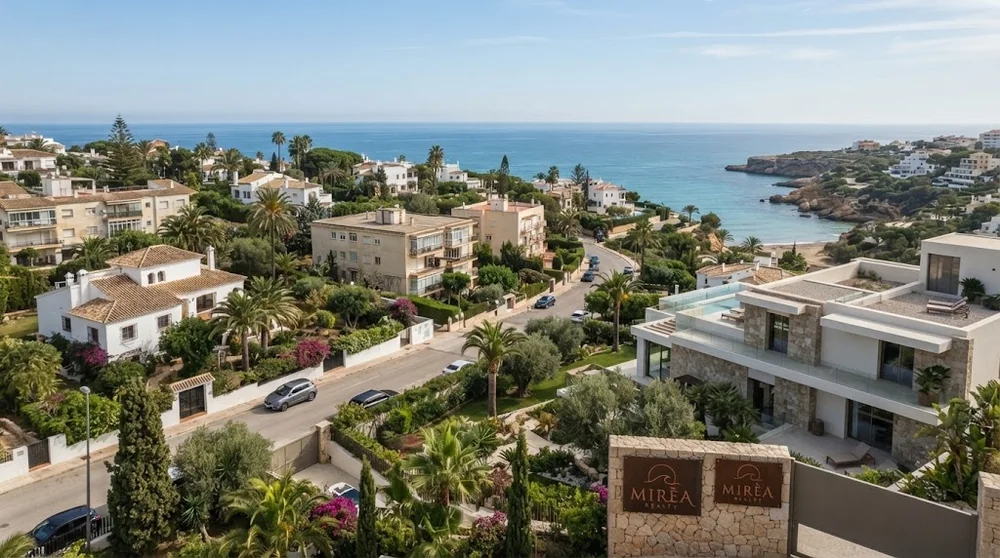
Spain’s 2008 property crash was driven by a credit boom, construction oversupply and a deep recession, not by a single event. In the years before 2008, bank and savings-bank lending expanded rapidly, developers built far more homes than local demand could absorb and many purchases relied on the assumption that prices would keep rising. When the global financial crisis hit, credit dried up, unemployment rose sharply and many developers and borrowers could not meet their obligations. The Banco de España later documented the scale of the banking restructuring that followed.
Falling activity came first and falling prices followed. Sales collapsed as mortgages became scarce, unsold new-build stock accumulated, and banks became sellers of repossessed property. According to the INE, the national Housing Price Index fell 14.3% year on year in the first quarter of 2013. That figure describes twelve months of decline at one point in the cycle for the general residential market; it is not the total fall from the 2007 peak and it is not a luxury statistic.
It helps to separate three kinds of evidence. A price index, such as the INE’s, measures how prices of completed sales change. A valuation series, such as Tinsa IMIE, measures how appraised values change. A transaction count, such as the notarial or registry sales figures, measures how many homes changed hands. During a crash, transaction counts often fall faster and earlier than prices, because sellers who do not have to sell simply withdraw.
Why Coastal Markets Corrected Differently
The coast did not fall as one block. Large peripheral developments built for speculative or mass-market demand, often on the outskirts of resort towns, suffered most from oversupply. Established prime streets, frontline plots and homes with protected views had a deeper buyer pool and far less competing stock. Premium property was not untouched by the crisis, but its correction depended heavily on location, quality and the seller’s need to sell. From our work along the Spanish coast, our interpretation is that discounts in prime enclaves often showed up as long marketing periods and negotiated reductions rather than in visible public statistics.
What Recovery Actually Means
“Recovery” can mean at least four different things: prices returning to growth, prices returning to their nominal peak, prices returning to their inflation-adjusted peak, or sales volumes returning to normal. The INE’s national index returned to positive annual growth of 1.8% in the fourth quarter of 2014, which marks the first meaning only. A market can be growing again for years while still sitting below its earlier peak. A return to positive annual growth is the start of recovery, not proof that earlier losses have been recovered.
How Costa del Sol Luxury Property Recovered

The Costa del Sol prime market recovered earlier and more strongly than the broad Málaga provincial market suggested, but the evidence for that comes mainly from consultancies and agents rather than official statistics. Official data for Málaga province includes inland towns, city apartments and mass-market coastal stock. The prime Costa del Sol is a much smaller market concentrated in a few municipalities.
Marbella and the Golden Mile
Marbella’s prime market is anchored by the Golden Mile, Sierra Blanca, Nueva Andalucía and the area around Puerto Banús, together often described with Benahavís and Estepona as the Marbella Golden Triangle. Knight Frank’s Prime International Residential Index recorded a 7.2% annual increase in Marbella prime prices in 2023. That figure measures the top segment of the Marbella market over one calendar year, using Knight Frank’s own research framework.
A separate Costa del Sol luxury study by The Agency Marbella, reported by Idealista, recorded a 3.7% increase for its premium category in 2024. The two figures do not contradict each other. They cover different years, different geographical boundaries and different definitions of “premium”. Here is the comparison with its limitation stated plainly: a 7.2% prime change in 2023 and a 3.7% premium change in 2024 cannot be read as a slowdown from 7.2% to 3.7%, because the two measurements do not track the same set of properties.
By 2026, a Marbella market assessment published by Knight Frank with its local partner DM Properties described a more selective market, in which buyers were discriminating more sharply between well-located, well-built homes and overpriced or dated stock. That matches what we see: the same street can hold a renovated villa that sells within weeks and an older one that sits unsold because the asking price assumes a finish it does not have.
Achieved prices versus advertised prices is the central practical issue in Marbella. Listings for new contemporary villas often set the headline €/m² for an area, while the actual sales in that area may include older homes at much lower levels. We always tell clients to check registered sale prices for genuinely comparable homes, not portal averages.
Benahavís and Estepona
Benahavís, inland from Marbella’s western side, combines golf communities, gated estates such as La Zagaleta and sea-view hillside plots. Its prime market depends less on beach access and more on privacy, security and views, which also means more dependence on road access and on a buyer who does not need to walk to the sea. Estepona, further west, matured later as a prime location; its newer frontline and New Golden Mile developments have attracted buyers priced out of central Marbella or seeking newer stock.
We do not have a verified, comparable public price series that isolates Benahavís or Estepona luxury homes over the full cycle, and we would be cautious about anyone who quotes one. What can be said is that post-pandemic demand broadened the Costa del Sol prime market westwards and inland, while supply of serviced, legal, well-located plots remained limited. A sea view is priced in — here’s how to judge if it’s worth it: compare the view’s permanence (could a neighbouring plot be developed?), the orientation, the noise from the coastal road and the walk or drive to everyday services, not only the panorama.
From our work along the Spanish coast, our view is that the Costa del Sol’s post-pandemic maturity rests on more year-round residents and better international connections through Málaga airport, but this is a team assessment, not a measured statistic.
Mallorca’s Prime Property Performance Since Recovery
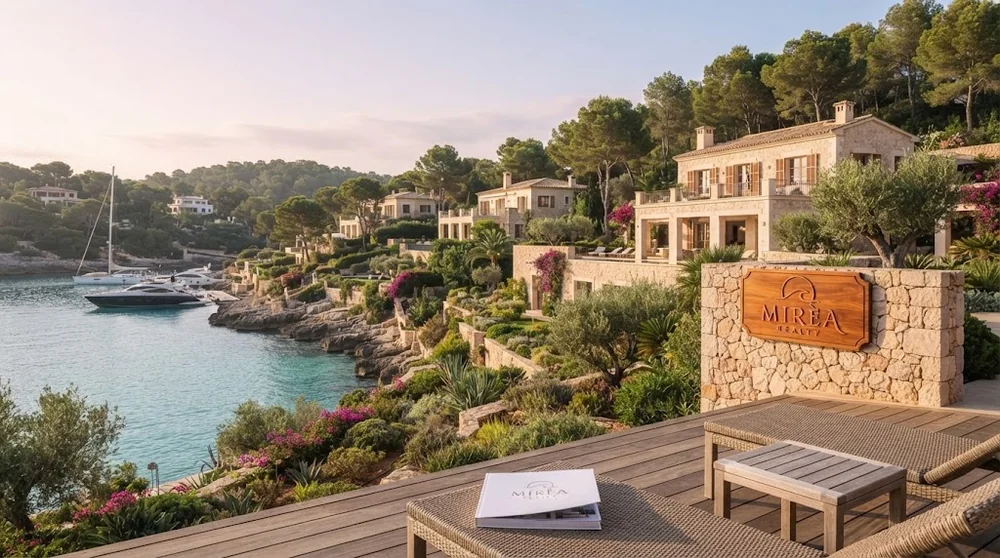
Mallorca’s prime market is concentrated in the southwest of the island and in Palma’s historic centre, and island-wide averages understate how different those micro-markets are. Portals Nous and Bendinat, in Calvià, offer short drives to Palma and the airport, marinas and international schools. Andratx, including Port d’Andratx, offers trophy sea-view villas on steep, limited land. Palma’s old town adds a separate segment of renovated historic apartments and townhouses.
Long-run luxury history for the island is thin. There is no public, transaction-based prime index for Mallorca covering 2007 to 2026. Knight Frank’s Prime International Residential Index provides a reliable snapshot: Knight Frank recorded a 7.0% annual increase in Mallorca prime prices in 2023. This is a one-year prime-market change, not a cumulative return since the crisis.
Asking-price data adds context but must be read for what it is. Engel & Völkers’ historical house asking-price observations for Mallorca were €3,696/m² in 2022, €3,946/m² in 2023, €4,217/m² in 2024 and €4,551/m² in 2025. Separately, Global Property Guide, citing Idealista historical asking-price data, reported a general Mallorca asking price of €4,045/m² in September 2023 and €5,002/m² in September 2025. The Idealista-based figures cover all advertised homes, including apartments, while the Engel & Völkers figures refer to houses; the two series should not be blended or compared as if they measured the same stock.
| Year | Mallorca houses, asking €/m² (Engel & Völkers) | Ibiza houses, asking €/m² (Engel & Völkers) | Measurement note |
|---|---|---|---|
| 2022 | €3,696 | €7,259 | Advertised house prices, island-wide; not achieved prices |
| 2023 | €3,946 | €7,976 | Same source and property type; composition of listings may change |
| 2024 | €4,217 | €8,376 | Not prime-only; includes all advertised houses |
| 2025 | €4,551 | €8,661 | Not comparable with Idealista all-property figures |
| 2026 | Not used here | Approximately €8,838 | Partial-year observation; treat as approximate |
Within Mallorca, villas and apartments behave differently. Detached sea-view villas in the southwest compete for a small pool of international buyers and are constrained by land and planning, while Palma apartments draw on a broader local and international pool and are affected by city-level rental rules. Renovated historic homes in Palma add another layer: their value depends heavily on the quality and legality of the renovation. Transport links matter too. Palma airport’s year-round connections support second-home use, but parts of the north and east of the island are more seasonal, which can lengthen selling times outside peak months.
Ibiza’s Luxury Property Market Through the Cycles

Ibiza is the most supply-constrained and the most price-dispersed of the three markets in this analysis. Its luxury segment ranges from sunset-facing villas in Sant Josep to rural estates in Santa Eulària and apartments around Talamanca bay, close to Ibiza town and the marina. A small island, strict planning and limited buildable land mean that new prime supply arrives slowly.
Knight Frank’s Prime International Residential Index recorded a 12.0% annual increase in Ibiza prime prices in 2023, the highest of the three markets in the same index that year. Asking-price data shows continued upward pressure: Engel & Völkers’ Ibiza house asking prices rose from €7,259/m² in 2022 to €8,661/m² in 2025 and approximately €8,838/m² in 2026. Global Property Guide, citing Idealista, reported general Ibiza asking prices of €6,311/m² in September 2023 and €7,306/m² in September 2025. Again, the first is a houses-only series and the second covers all advertised property.
High prices do not mean a deep market. In a narrow luxury market, a few transactions can move an average sharply, and a high asking price does not show how quickly a home could be sold. Ibiza’s trophy villas may attract only a handful of qualified buyers at any time, and prices across seemingly similar homes can vary widely according to view, licence status, water supply and access. A mistake we often see with beachfront buyers: assuming that a rare property will always find a buyer at the seller’s price, when rarity can also mean a very small pool of people willing to pay it.
Seasonality is pronounced. Much buying activity follows the summer season, and some areas are quiet in winter. Legal and practical questions also weigh more heavily here than in larger markets: whether a rural villa’s extensions were properly licensed, whether the property has reliable mains water or depends on wells and deliveries, and whether a holiday-rental licence exists and can legally pass to a new owner under current Balearic and island rules. We do not have a verified long-run Ibiza luxury price series back to 2008, so any claim about the island’s total gain since the crisis should be treated with caution.
Our team assessment: Ibiza’s price strength and its liquidity risk come from the same source — extreme scarcity — so the island deserves the most careful due diligence of the three markets.
Costa del Sol vs Mallorca vs Ibiza: Historical Comparison
The only directly comparable numerical evidence across all three markets in this analysis is Knight Frank’s 2023 prime index: Marbella +7.2%, Mallorca +7.0% and Ibiza +12.0%. These are annual changes in prime residential prices during 2023 within one research framework. They are not total returns since 2008, not net investment returns and not adjusted for inflation. For every other dimension, the comparison is qualitative.
| Market | Prime Submarkets | Available Historical Evidence | 2023 Prime Price Change (Knight Frank) | Demand Characteristics | Supply Constraints | Liquidity Considerations | Evidence Limitations |
|---|---|---|---|---|---|---|---|
| Costa del Sol (Marbella reference) | Golden Mile, Sierra Blanca, Nueva Andalucía, Benahavís, Estepona | INE national/regional data; Registradores for Málaga province; Knight Frank 2023; agency studies | +7.2% (Marbella prime, annual) | Broad international mix; growing year-round residence | Limited frontline and serviced prime plots; more land than the islands | Deepest of the three, but varies sharply by price band and building age | No public long-run Marbella luxury transaction index |
| Mallorca | Palma old town, Portals Nous, Bendinat, Andratx | Registradores for Balearics; Knight Frank 2023; asking-price series | +7.0% (Mallorca prime, annual) | Strong northern European second-home demand | Island geography, planning limits, scarce sea-view plots | Moderate; seasonal in some areas | Island figures mix very different districts |
| Ibiza | Sant Josep, Santa Eulària, Talamanca, rural estates | Registradores for Balearics; Knight Frank 2023; asking-price series | +12.0% (Ibiza prime, annual) | Lifestyle and leisure-led, highly seasonal | Very limited land, strict planning, water constraints | Narrowest; few qualified buyers at top prices | Small samples; high price dispersion |
Secondary data must be kept separate. The asking-price series for Mallorca and Ibiza in the previous section show island-wide advertised levels, not prime achieved prices, and there is no equivalent Engel & Völkers house series used here for Marbella. Comparing Ibiza’s approximately €8,661/m² house asking price in 2025 with a Marbella prime percentage would mix two incompatible measures.
Why do datasets disagree? Mostly for four reasons: different luxury thresholds, different geographic boundaries, asking versus achieved prices, and changes in the mix of properties sold or listed. If more new villas come onto the market one year, an average €/m² can rise even if no individual home gained value. For that reason, a higher growth rate in one year does not prove that one market has delivered better long-term performance than another.
Why Spain’s Prime Coastal Markets Became More Resilient
Several structural features help explain why prime coastal markets have recovered and held up better than many expected. None of them makes prices immune to falls.
Demand and Buyer Profiles
According to the Colegio de Registradores de España, foreign buyers accounted for 32.8% of residential purchases in Málaga province and 29.86% in the Balearic Islands in 2025, with first-quarter 2026 figures of 34.3% and 28.89% respectively. These are shares of all residential purchases in each province or region, not shares of luxury purchases, and readers should check the original registry release for the exact period definitions. They show that international property buyers are a large and persistent part of both markets.
- Diversified international demand: buyers come from many countries, so weakness in one economy does not remove all demand.
- Wealth-driven purchasing: prime buyers often purchase from accumulated wealth rather than income, which can make them less sensitive to mortgage rates.
- Second-home and relocation demand: lifestyle, climate and remote-work patterns have supported longer stays and year-round use in some areas.
- Infrastructure and services: Málaga and Palma airports, international schools, marinas, healthcare and established residential services support the top of the market.
- Quality-driven preferences: buyers increasingly pay premiums for modern, efficient, legally compliant homes, which supports values in that segment specifically.
High foreign participation cuts both ways. It diversifies demand, but it also exposes these markets to exchange-rate movements, foreign tax changes, travel disruption and economic shocks in buyer countries. The end of Spain’s investment-based “golden visa” route, abolished by Ley Orgánica 1/2025 with effect from April 2025, is one reminder that policy affecting foreign buyers can change.
Scarce Prime Supply
Prime coastal land is genuinely limited. Coastal protection rules, protected natural areas, mountain terrain and municipal planning restrict where new homes can be built, especially on the islands. Scarcity supports prices when demand is strong. But scarcity applies mostly to the best plots and views, not to all coastal property; secondary locations and dated stock can face real competition from newer homes.
Limits of Cash-Buyer Protection
Cash purchases reduce a market’s sensitivity to mortgage rates, but they do not remove price risk. Cash buyers can still choose to wait, negotiate harder or withdraw when sentiment changes, and wealth can fall in a financial crisis. Cash-heavy markets often adjust through fewer sales and longer selling times rather than through sudden public price drops, which can make the real correction harder to see in the statistics. We have no verified statistic on the share of cash buyers in Marbella, Mallorca or Ibiza luxury sales, so treat any precise figure with caution.
How to Measure Historical Property Resilience Correctly
Property resilience is measured by how much value falls in a downturn, how long it takes to recover in real terms and how easily owners can sell, not by recent price growth alone. A resilient market can still fall; it simply tends to fall less, recover faster and keep functioning as a market. Here is the analytical checklist we use when assessing any historical claim:
- Peak-to-trough change: the percentage fall from the highest to the lowest price level in a cycle, using the same measure throughout.
- Recovery duration: how many years it took to regain the previous peak, stated separately in nominal and inflation-adjusted terms.
- Inflation-adjusted appreciation: price change after removing general inflation, which shows whether purchasing power was preserved.
- Sales volume: the number of completed transactions, because falling volumes often signal stress before prices react.
- Time to sell: how long comparable homes take to sell, which reveals liquidity in a way price indexes cannot.
- Asking-to-achieved gap: the difference between advertised and registered sale prices; a widening gap points to weakening demand.
- Concentration risk: dependence on one buyer nationality, one season or one property type.
- Owner-level net return: price change minus purchase taxes and fees, ongoing ownership costs, financing costs and sale costs, plus any net rental income.
The difference between nominal and real house prices is where most misunderstandings begin. Tinsa’s September 2026 IMIE report shows the gap clearly: several broad categories had exceeded their 2007 nominal highs, yet after inflation valuations remained more than 30% below earlier highs, except the Islands category, which remained 13% below.
Hypothetical illustration (rounded, fictional figures for teaching purposes only): an owner buys a coastal villa in 2007 for €1,000,000 and pays €100,000 in purchase taxes and fees. Assume the villa is worth €1,100,000 in 2026, a nominal gain of 10%. Assume cumulative inflation over the period of 50%. In 2007 money, €1,100,000 is worth €1,100,000 ÷ 1.5 = €733,333, a real loss of about 26.7%. Now add ownership costs: assume €15,000 a year for 19 years, or €285,000, and sale costs of 5%, or €55,000. The nominal result is €1,100,000 − €55,000 − €1,000,000 − €100,000 − €285,000 = −€340,000, before considering any rental income, financing costs or taxes on the sale. The headline price rose, yet the owner’s position, in this illustration, is substantially negative.
Real figures will differ for every property. The point is that price appreciation, real appreciation and owner return are three separate measurements. Reliable micro-market transaction data for a specific street or development may also be incomplete, so local comparables and professional valuations matter.
Coastal Regulation, Planning and Long-Term Value

Regulation shapes coastal values as much as demand does, because it determines what can be built, used and rented. This section reflects the regulatory context as of October 2026 and is a plain-English overview, not a legal buying guide.
- Ley de Costas: Spain’s Coastal Law (Ley 22/1988 de Costas), amended by Ley 2/2013 in May 2013, defines the public coastal domain, which belongs to the state, and sets protection zones inland from it, where building and works are restricted.
- Public coastal domain and older homes: some properties built before the 1988 law sit partly within the public domain or protection zones and may hold concessions rather than full ownership, or face limits on renovation.
- Municipal planning: each municipality’s urban plan decides where building is allowed; extensions or homes built without proper licences can carry legal and resale problems.
- Protected areas: natural parks and protected rural land limit new building, particularly on Mallorca and Ibiza.
- Holiday-rental permissions: Andalusia regulates tourist homes through its regional register, with municipalities given greater powers to limit new licences in recent years; the Balearic Islands apply a separate, stricter framework, with island councils and Palma imposing their own limits on new tourist rentals.
- National rental registry: since July 2025, short-term and seasonal rentals have also needed registration in Spain’s single rental registry under Real Decreto 1312/2024.
Coastal proximity alone does not establish that a building is lawful. Older beachfront properties often need extra verification: the land registry entry, the cadastral description, the coastal demarcation line, the building licence and the first-occupation or habitability certificate should all agree. Where they do not, the price may already reflect the problem, or the buyer may be the one who discovers it. If you are weighing a specific coastal property and its documents, a short conversation before you commit can save a great deal of time and cost.
If you have questions about the legal steps for a particular coastal home, from the coastal line to the rental licence, our team can talk them through with you one to one.
Andalusia and the Balearics should not be treated as one regulatory environment. The Balearic framework is generally more restrictive on new holiday rentals and new building, which constrains supply and supports prices for compliant homes, but also limits rental income options. On the Costa del Sol, licensing rules differ between municipalities and have tightened in places. In both regions, regulation affects supply quality, resale friction and investment economics: a legally clean, licensable home tends to sell more easily than an otherwise similar home with unresolved paperwork.
What Historical Performance Cannot Predict
Historical resilience describes how a market behaved in past conditions; it does not tell you how it will behave in the next downturn. The shocks that matter are often different each time. Rather than offering price forecasts, the table below sets out three plausible environments and what to watch.
| Scenario | Potential Mechanism | Evidence to Monitor | Confidence Limitation |
|---|---|---|---|
| Stable demand | International demand and limited prime supply remain broadly in balance | Steady registry foreign-buyer shares; stable selling times; narrow asking-to-achieved gaps | Stability in averages can hide weakness in specific property types or older stock |
| Softer demand | Higher interest rates, weaker buyer economies, tax or regulatory changes, or currency moves reduce buyer numbers | Falling transaction counts; rising listings; more price reductions; weaker currencies in key buyer countries | Prices may adjust slowly, so official indexes can lag the real market |
| Adverse liquidity | A financial shock or sharp sentiment change leaves few buyers at current prices, especially at the top end | Long marketing periods for prime homes; withdrawn listings; distressed or forced sales | Luxury liquidity data is limited and often private, so stress may appear late in public statistics |
Other risks sit outside these scenarios. Currency exposure can change the value of a euro-denominated home for owners whose wealth is in another currency. Maintenance costs are higher for large coastal villas, where salt air, sun and wind age materials quickly. Climate-related physical risks, including coastal erosion, storm damage, heat and water scarcity, are increasingly relevant to insurance, maintenance and future buyer demand, particularly for frontline homes and on the islands. Excess asking-price optimism after strong years can also widen the gap between what sellers expect and what buyers will pay. Resilience means a market has absorbed shocks before; it does not mean prices cannot fall.
What the Historical Evidence Means for Coastal Buyers
The factual findings are straightforward. The national market fell sharply after 2008, returned to annual growth in 2014 and grew strongly after the pandemic. Prime coastal markets recorded solid one-year gains in 2023, according to Knight Frank. Tinsa’s September 2026 data shows that broad nominal recoveries do not always equal real recoveries, and the Mediterranean Coast category had not yet regained its 2007 nominal peak. Before turning to our practical lessons, a useful starting point is to define your own criteria clearly: budget, preferred coast, how you will use the home and how long you expect to hold it.
If you would like to see how coastal areas compare against your own budget, preferred coast and buying goals, a short questionnaire is the quickest way to start.
With those criteria in mind, the historical evidence becomes far more useful, because you can test it against the specific type of home you are considering rather than against headline averages. These are the lessons we draw from it:
- Compare like with like: use registered sale prices for genuinely comparable homes in the same micro-location and condition, not portal averages.
- Identify data coverage: check whether a statistic is national, regional, provincial or local, and whether it covers houses, apartments or all property.
- Check real as well as nominal change: adjust historical gains for inflation before concluding that value was preserved.
- Test resale depth: ask how many similar homes sold in the past year and how long they took.
- Verify legal status: coastal-law position, licences and rental permissions all affect future value and saleability.
- Avoid ranking by recent growth: one strong year says little about long-term performance or downside risk.
Our considered editorial assessment, as the Mirea team, is that strong past demand in Marbella, Mallorca and Ibiza justifies careful further research, but it provides no guarantee of capital preservation. For decisions about a specific purchase, structure or tax position, we recommend independent legal, tax and financial specialists.
Frequently Asked Questions
How has Spain’s luxury coastal property market changed since 2008?
Spain’s luxury coastal property market moved through the 2008 financial crisis, a prolonged correction, recovery during the 2010s and stronger post-pandemic demand. Marbella, Mallorca and Ibiza followed different paths, reflecting their property supply and international buyer bases. Nationwide house-price statistics from the INE document the broader cycle, but comparable luxury-only transaction data covering the whole period is limited.
Did luxury properties on Spain’s coast recover from the 2008 crash?
Selected prime coastal markets recovered significantly after the financial crisis, although timing and extent differed by location and property type. A market exceeding its earlier nominal price peak has not necessarily recovered in inflation-adjusted terms. Tinsa’s September 2026 findings show why regional valuations, inflation and property segment must all be considered before claiming that Spanish coastal property has fully recovered.
How did luxury property prices perform in Marbella, Mallorca and Ibiza?
Knight Frank’s Prime International Residential Index recorded annual prime residential price growth in 2023 of 7.2% for Marbella, 7.0% for Mallorca and 12.0% for Ibiza. These figures provide a comparable one-year snapshot rather than a complete historical return. Longer-term comparisons require consistent definitions, transaction evidence and inflation adjustments across all three markets.
Why have luxury coastal property prices increased in Spain?
Important drivers of Spanish luxury coastal property prices include international lifestyle demand, wealthy second-home buyers, limited availability of high-quality coastal plots and the appeal of established destinations such as Marbella, Mallorca and Ibiza. Their influence varies by neighbourhood and market cycle. Strong demand and scarce supply can support pricing, but neither prevents corrections, weak resale liquidity or overvaluation.
Is Spain’s luxury coastal property market resistant to economic downturns?
Some prime coastal segments in Spain have shown relative resilience, supported by international buyers and limited premium supply, but resilience does not mean prices cannot fall. Reliable assessment requires transaction activity, selling periods, inflation-adjusted prices and evidence of recovery after earlier declines. Cash-funded purchases may reduce mortgage sensitivity without eliminating market or liquidity risk.
Are Spanish coastal property prices higher than before the 2008 crash?
The answer depends on location, reference date and inflation adjustment. Tinsa’s September 2026 IMIE data showed several broad residential categories above their 2007 nominal peaks, while real values remained more than 30% below, or 13% below for the Islands. The Mediterranean Coast category had not exceeded its earlier nominal peak. These broad measures cannot substitute for individual prime-property valuations.
Our Conclusions on Spain’s Coastal Property Cycle
Spain’s luxury coastal property market has travelled from a painful post-2008 correction through a gradual recovery to a strong post-pandemic expansion. The evidence supports a story of relative resilience in prime locations, driven by international demand, scarce land and established services. It does not support a story of uninterrupted gains or immunity to downturns, and it does not provide one continuous luxury price series for the Costa del Sol, Mallorca or Ibiza.
From our work along the Spanish coast, the most useful habit we can pass on is to ask what each number actually measures: which market, which period, which type of price and whether inflation and costs are included. Knight Frank’s 2023 figures, Tinsa’s 2026 valuations and the Colegio de Registradores’ buyer data are all valuable, but only when read on their own terms.
If you take one thing from this history, let it be this: a strong price record is a reason to look closely, not a reason to stop looking. Legal status, liquidity, real returns and the quality of the individual home will matter more to your outcome than any regional headline.
Disclaimer: This article provides general historical market information as of October 2026. It is not individual legal, tax or investment advice, and it makes no promise of future prices, returns or rental income. Regulations, taxes and the condition of individual properties change and should be checked with qualified independent professionals before any decision. Official statistics referred to are published by the Instituto Nacional de Estadística, the Colegio de Registradores de España and the Banco de España.
 Real estate in Georgia
 Real estate in Montenegro
 Real estate in Cyprus
 Real estate in the UAE
 Bali Real Estate
 Real estate in Thailand
 Real estate in Saudi Arabia
 Real estate in Turkey
 Real estate in Zanzibar
 +34 611 898 442
 hello@property-spain.es
 Spain



 Get catalogue of TOP-7 objects